Showing posts with label Athletic Bilbao. Show all posts

Thursday, 8 August 2013

From rags to riches: does simplicity serve as football's helping hand?


Annually, a fundraising, objective match featuring football legends like the Brazilian Ronaldo and Zinédine Zidane, groups together some of the world’s greatest players and casts a stellar line-up for the "Match Against Poverty", which aids over 27 developing countries worldwide. In 2012, it took place on 19 December at the Gremio Arena in Porto Alegre, Brazil; over 50,000 thousand fans swarmed to the arena to witness Ronaldo's team narrowly beat Zidane's 3-2.


But what if, ironically, despite these efforts, poverty crafts greater footballers?

At the Economic Commission for Latin America and the Caribbean (ECLAC), statistical information is collated in order to measure the poverty levels of millions and millions of people. Countries like Brazil, Argentina, Uruguay and so on are monitored by ECLAC, which discovered that in 2012, approximately 167 million people, or around 28.8% of Latin American and the Caribbean, were living in poverty.

Now, poverty is a serious issue tackled by a multitude of international organisations, and the horrendous problems it brings are there for the world to see; Comic Relief opens the eyes of the public every year, for example. Although, throughout the shanty towns, the favelas, the penniless communities and the sewage, a way of passing the time among children of all ages and different gender remains constant.

"As a boy, I played football barefoot in the streets with a ball made of old socks." Pelé or Edson Arantes do Nascimento, needs minimal introduction to any football fan. His astounding career, found in grainy montages on YouTube, is legend in the world of football, and the Brazilian's raw talent makes countless greats since his playing days look average.

Pelé was an astonishing player, however he was not nurtured from an early age by coaches with top-quality facilities like the youth set up in England and Germany today, for example. Partly, that was to do with the time in which he grew up, however it is interesting that, left to his own devices with other children who founded and devised independent teams and competitions (Pelé's childhood team were named 'The Shoeless Ones'), he developed in such a way that vastly contributed to his outstanding career, and gave him the skills that he would use to help his club and country to international fame and success. He grew up with minimal advantages, and yet his childhood is an integral, if not the stand-out factor for his incredible career.

Brazil as a nation is a fine example of this correlation which is simply impossible to ignore, given their glamorous history of football and recent FIFA Confederations Cup victory which runs alongside the country's many slums, favelas and poor conditions. The nation lives and breathes the sport; journalist Alex Bellos, author of Futebol - A Brazilian Way of Life, puts the obsession down to the late abolition of slavery in the 19th century, and a lack of positive, historic symbols thereafter.

With little to aspire to, the children of Brazil's favelas are likely to view football as their only way out of a life of poverty and deprivation. What makes quality players is practice, and the endless practice comes from the determination not to have a life controlled by drug dealers and crime. It is an opportunity for bonding in a world of football and team spirit rather than gangs and crime; there is a chance for expression, elation and creativity rather than accepting the poor, depressing quality of life they are born into. It is no wonder the people of Brazil's favelas, and Brazil as a nation, have football written into their DNA.

Pelé and his countrymen, however, are not alone. On the same continent, Diego Maradona was born in 1960 and raised in a shanty-town by parents who were both illegitimate children. A generation later, Jorge Horácio Messi, a factory steel worker, and Celia María Cuccittini, a part-time cleaner, could not afford hormone growth treatment for their child, Lionel. Only FC Barcelona could pay the fees. There are proportional yet similar examples across time, and all around the world. It is too large a possibility not to question it: does the quality of football as a sport benefit at the hands of simplicity, disadvantage and poverty?

Thousands of players worldwide, many of them being high-profile and world class, have come from underprivileged homes and lifestyles. A couple of extreme examples of the ‘rags to riches’ story are courtesy of Bébé and Nani, the Portuguese duo from Manchester United. Bébé was discovered competing for a Portuguese homeless team (he did not actually play in the Homeless World Cup), and Nani, whose parents abandoned him and left him to be raised with nine siblings by his aunt, played football regularly as a child with his brother who taught him about the game. His first club, Real Massamá, were able to provide him with money, food and helped him obtain ID and a passport.

In proportion, it is worth scratching the rather shiny surface of powerful countries like England to see how this theory continues, and if anything unexpected lies underneath the reflected gold. Of course, the traditional 'working class' is hardly what is defined as poverty, and therefore they may, in comparison to the wealthy, upper class members of society, live simpler lives. In a developed, superior country like England, and Britain as a whole, there is a small link to the poverty-stricken livelihoods that people experience day in, day out in third world countries.

And that link, ultimately, is football.

Now, this similarity may not be complicated. It may be a result of lower-income families having a lower amount of resources to stimulate their children, leaving them with more time to simply play football in the social way that the children of Brazil do, and not only in this day and age. In stereotypical working-class estates and council housing, there is likely to be a large amount of other children around when compared to the larger, often detached houses that the upper classes would typically live in. You may call this a clutch at straws, or generalising; it possibly is, given that there is no definitive evidence. However, the infrastructure of the country's class system would back these factors up, as well as the backgrounds of many successful footballers.

Although, is there a possibility that it could go deeper than only that? Football, on many an occasion, is labelled as being the sport for 'the working class'; and the origins of the game itself, not just in England, is down to a workforce whose initiative and determination has brought about a structured, communal sport that superseded any other social gatherings and groups of the late 1800s - and it still does.

In England, the Football League's origins comes from the mills, and it was described as a "cloth cap man's game", referring to the stereotypical and universal uniform of the factory and mill workers. If the cloth cap was one symbol of their class and livelihood, then their enthusiasm for football quickly became another. William McGregor, the founder of the Football League, served an apprenticeship as a draper (a retailer of cloth that was mainly used for manufacturing clothes), indicating that his background, along with those who aided him in creating the institution, was hardly one to be considered 'upper class'.

Although the rules, regulations and general overseeing of the new league fell to the rich and powerful (the first set of the sport's rules were commissioned at Cambridge University following widespread confusion and many different versions of the game), football remained and belonged very much to the "cloth cap" population, as the locations of the founding members of the Football League itself implies.

The 12 original founding members were Accrington, Aston Villa, Blackburn Rovers, Bolton Wanderers, Burnley, Derby County, Everton, Preston North End, Stoke, West Bromwich Albion and Wolverhampton Wanderers; a collection of clubs with an immense northern, and therefore industrial, influence. In fact, British workers are responsible for Spanish success, too: Athletic Bilbao were founded by steel and shipyard workers, as well as miners, from both southern and northern England. Bilbao itself was a port, the influential cog in the mechanism of the Spanish economy, home to workers who made a living at the shipyards and iron mines nearby.

Furthermore, there is a link through time from this working culture to English success - just take a look at the 1966 World Cup winning squad. For example, Gordon Banks grew up in Tinsley in Sheffield, a working class area of the city. Brothers Jack and Sir Bobby Charlton grew up in Ashington, Northumberland, which was once the centre of the coal mining industry. Ashington was considered to be the "world's largest coal-mining village" many years ago. Ron Springett spent his childhood in Fulham, a former working class suburb of London. The list goes on: Geoff Hurst lived in Ashton, which neighbours Oldham; John Connelly developed his skills in St. Helens; Jimmy Armfield's family is from Denton, greater Manchester, once the centre of hat manufacturing; Gerry Byrne grew up in Liverpool in the late 30s; Martin Peters matured in Plaistow, which borders West Ham and is home to many council estates, and Ron Flowers' younger years were spent in Edlington, again a small mining town.

Although these areas may have been much more developed in the modern day, it suggests how the aforementioned working class ethos that is ingrained, hand in hand, with football, and British football especially, may be an unmentioned, subconscious platform for success. What exactly the real, specific cause of this link is would be nigh on impossible to pinpoint, and, of course, a variety of factors influence individual people's lives; it just appears too related to be a coincidence throughout the range of poverty, underprivileged lives and working class. In other words, what this points to is that a wealthy background (naturally there are exceptions) may be the opposite of a positive backing for a football career; money cannot buy some of the social factors that lower classes gain by default. Again, it is not possible to conclude that this is definitive; yet, the ultimate point of this article is to make you wonder if such a link exists; and if it does, what is to be done about it.

Although poverty is terrible, and the charity workers and those involved around the world trying to help fight poverty are to be admired, viewing it in this light suddenly sees it as a platform for the success and infrastructure of football; whether that be extreme poverty, homelessness or a simpler or deprived life in a developed country or not, the contribution it has to football due to the mass amount of time children spend playing the sport could be invaluable. It is a superstructure; the platform of football among other factors, that has contributed over time to countless world-class footballers, and realistically, always will.

Wednesday, 3 April 2013

The power of the supporter is the saviour of Spanish football


Spain has an unwavering obsession with football: especially its own. Barcelona and Real Madrid, the crown jewels of the country’s favourite sport, undoubtedly epitomise what every football club in the world aspires to be, paving the way in terms of status and superiority. On top of this, they manage their fierce political rivalry, which passionately divides Spaniards.

National best-selling newspapers like Marca and El Mundo Deportivo, based in Madrid and Catalonia respectively, reflect the country’s obsession with the beautiful game, and further encourage the divide between clubs and fans. Such rivalry on this scale is daunting for those unfamiliar with it; however, in a country where fans take the wrong approach, supporting either Barcelona or Real Madrid no matter where their birthplace happens to be, it is at least understandable.

Compared to the English Premier League, La Liga revels in its own creations. Guillem Balague, critically acclaimed author of Pep Guardiola: Another Way of Winning and respected Sky Sports La Liga pundit, remembers Barcelona fielding a full starting eleven against Levante in November who were all "products of the club's youth system". The famed academy's emblematic vicinity is La Masia, the converted farmhouse located meters from the Nou Camp. Athletic Bilbao, one of the oldest football clubs in Spain, shares a similar attitude to producing adept, shaped footballers, nurturing them in their Lezama facilities.

"We have the aim," says a source at Athletic, "to play with players formed in Lezama. Other clubs can complete their teams with players coming from abroad, but youth development is a need in our case." Additionally, Guillem recognises that as many as "16 clubs in La Liga are effectively bankrupt," and so it becomes clear that, ultimately, youth development is a necessity for many like Athletic.

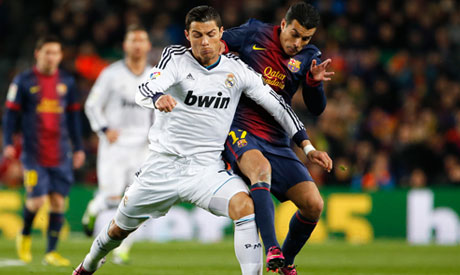
In the grander scheme of things, the weekly excellence of the Barcelona players or the fast feet of Cristiano Ronaldo are insignificant. La Liga’s playing style and prominence is idolised around the world; although, internally, the mismanagement of financial affairs has written the league's own suicide note and threatens to grind the glowing life from Spanish football with its bare, skeletal hands. The star players that the uniquely dominant La Liga can attract, create and can afford are simply the bricks and mortar which has constructed the palace of Spanish football. Said palace, however, is crumbling.

Does Balague believe there is a bright future for Spanish football? "Absolutely not," he declares. "Many clubs are up the creek without a paddle. Real Madrid and Barcelona cream off around 50% of the media money available, leaving the rest of the league to scrap about for whatever crumbs are left on the table."

La Liga's debt is hovering around the €3.5bn mark, with the two top leagues in Spain owing approximately €750m in taxes. These figures have been at crisis point for some time, partly due to the unequal share of television rights. As expected, Los Merengues and El Blaugrana again claim around 50% of the current television rights divide, earning €140m each.

Financially, Real Madrid and Barcelona dominate world football - their annual turnovers dwarf that of any other club

The Deloitte 2013 Football Money League analyses the complete income and revenue of the world’s largest clubs, recognising Real Madrid and Barcelona as the top two institutions, who raked in €512.6m and €483m respectively in the 2011/12 campaign alone. In fact, Jose Mourinho’s Blancos became “the first sports club to surpass the €500m revenue threshold in a single year”, according to Deloitte’s report. Both clubs’ budget is reflected in this turnover as Richard Fitzpatrick, author of the outstanding El Clásico, points out: “La Liga is crippled by the Barcelona/Real Madrid duopoly, which stifles other clubs in Spain; for example, Rayo Vallecano’s budget this season was €7m compared to the €500m that both Real Madrid and Barcelona had to spend.”

Richard and Guillem demonstrate a shared astuteness about how exactly they believe the future of La Liga will pan out. “I think La Liga will become a satellite league.” says Fitzpatrick; and it will soon become clear why. According to Guillem, Barcelona and Real Madrid will most likely end up “playing in some multi-billion pound European league funded by the world's super corporations while the rest of the clubs go to the wall”. Sadly, for the well-being of smaller clubs around the world, this does not look promising. Richard develops on this, explaining how he believes there is “an inexorable push towards a Super European League with, say, four Spanish teams qualifying every season”. With other European giants likely to join said 'Super League', set to become the spoilt brat of a love-child of the money-centred farcical organisations which control world football, a devastating period of neglect shall be inflicted upon the clubs left behind.

Now, where does all of this actually leave Spanish football?

Spain's leading football economist and economics professor at the Universidad de Barcelona, Jose Maria Gay de Liebana, predicted last September that Spanish football will “kill itself” in the dauntingly near future. “A year ago, I predicted that La Liga had ten only ten seasons left, now I see that five more would be a lot.” Prophetic? Undoubtedly. And hauntingly so.

Ever since Pep Guardiola, the iconic Catalan, introduced his innovative pressing game to Barcelona back in 2008, teamed with the famed tiki-taka style of play, Spanish football has been immensely fashionable. 

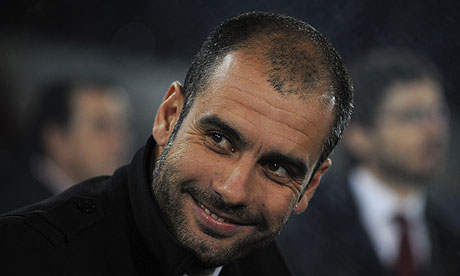
The inspirational and catalytic Pep Guardiola made his Barcelona side play beautiful football; in turn, he also inspired the Spanish national team's success

Guardiola's renovation of Barcelona saw him win an unrivalled sextet of trophies in his first full year in charge; and this alerted a certain Vincente del Bosque to take note, leading to the worldwide fascination in and scrutiny of Spanish football. Del Bosque added to Luis Aragonés’ Euro 2008 victory by claiming the 2010 World Cup in South Africa and then, in defiance of his critics, inspired his squad to a successive European Championship title last year.

The significance of this revolutionary playing style and success of the national team is that, the current crop of outstanding players who are either Spanish and play for the national team, or were players under Guardiola, have all contributed to the monstrous rise to worldwide domination from Spain. Therefore, removing Barcelona and Real Madrid especially will vastly contribute to the proposed death of La Liga and inevitable neglect of the smaller clubs. There is also no guarantee that future generations of Spaniards will be of similar calibre to today’s. The identity of Spanish football may well be on the verge of becoming extinct: in its own country.

In mid January, Bayern Munich made the remarkable announcement that Pep Guardiola is to become the club's head coach come the end of the current season. Bayern is a club run similarly to Barcelona, explaining why Guardiola opted for a move to Germany: both are owned by members who are also fans, own impressive youth academies (something which has been enshrined in law Germany’s top two leagues) and are worldwide brands.

Unlike La Liga, debt is not a noticeable issue in the Bundesliga, as fans are valued - not exploited. Season tickets at Munich can be purchased for as little as €100 and average attendances in the whole of Germany embarrass England, Italy and Spain.

Hans Joachim-Watzke, the CEO of Borussia Dortmund, sees importance in treating the average German supporter correctly 

The Borussia Dortmund CEO, Hans-Joachim Watzke, recently told FourFourTwo that “if you tell a German fan he is just a customer, he is going to kill you”. Christian Seifert, the Bundesliga chief executive, believes that the success of the German top flight is due to the “core value” of the supporter and their importance at every club, hence the affordability of tickets. Team this with the dwarfing average attendances, youth dependency, the ‘50 + 1 rule’ (which consists of members having to own at least 51% of a club so that a single entity cannot take control), clubs paying less than 50% of their revenue on player wages and the sheer attraction of football quality to the fans, and it is clear to see why the Germans can breathe easily, creating a yearly turnover of around €2bn with small annual losses now and again (two since 2003).

In the land where the fan is the king of the castle, Guardiola is about to unleash the Spaniard, the Catalan,inside him; this may be the first of many examples to come, but the Catalan's introduction to German football is where the external redemption of Spain will begin.

“I think he will bring his pressing game to Bayern Munich,” says Richard Fitzpatrick. “But not so much of the tiki-taka unless he buys Pique to bring it out from the back, Sergio [Busquets] and Iniesta.” It is,however, rather unlikely the trio will be moving to accompany Guardiola. He shall have to adapt to Germany's differences, as well as keeping his core, Spanish orientated beliefs, potentially becoming a pioneer as the first landmark prophet of Spanish football.


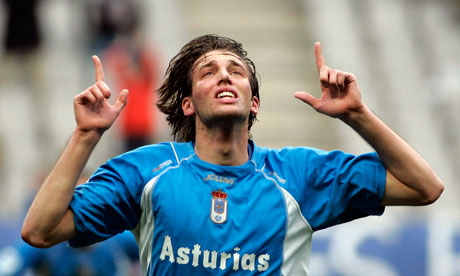
The financial resurrection of Real Oviedo was aided by former players, like Swansea City's Miguel Michu (above), who gifted a portion of their own money to help rescue the club from liquidation

Of course, while Guardiola ventures to other lands for his own expedition, Spain is still left to stagnate; and this is where remarkable tales, such as that of Real Oviedo, need to become more frequent. The experience of the Oviedistas came to light in November of last year, when the club’s president began enquiring about the details of liquidation. The club may presently find itself in the third tier of Spanish football, however they are looking ambitious and resurrected: thanks to a cluster of English Premier League players, the richest man in the world and, of course, their fans.

Since relegation from La Liga in 2001, Real Oviedo have never gone under 10, 000 season ticket holders; something which only two other teams outside of the top flight can boast. Therefore, a respected fan base is more likely to aid clubs in times of desperation. Add this to the fact that Premier League trio Miguel Michu, Juan Mata and Santi Cazorla, who have all played for Oviedo, gave money from their own pockets to help out, and you have a redeeming formula.

It also drastically relieved tensions when the richest man in the world, Mexican Carlos Slim (worth £43bn through his telecommunications company), bought a stake in the club worth under £1.6m, hauling the club from death’s door, feeding it a much needed meal or two, and forcing it through rehabilitation.

Naturally, other factors aided Real Oviedo in their rise from the depths, but their supporters are worthy of , the fans are the “core” of football. The small Spanish club may be eons away from the bright lights of Bayern Munich; however its story is an example to all of Spanish football.

Alter your attitude towards the fans to that of the German culture, and reap the rewards come Judgement Day. Whether or not the Spaniards will take note of what is staring them in the face, however, is another issue.

After all, the potential exists: Spanish football can be rescued from the looming abyss of its widely prophesied fate, avoiding the perils of its own creation. Although, this will only occur should they be acknowledged and amended.

And it is all down to those who are ready and willing.