Showing posts with label Jose Mourinho. Show all posts

Monday, 14 September 2015

Everton 3 – 1 Chelsea: Heroes And Enigmas

"Well aren't you lot glad Roberto didn't sell me to Norwich ?" 

With little over ten minutes of normal time remaining in Saturday’s fixture, and with the score at 2-1, Chelsea were threatening.The atmosphere was rippling with nerves. Above all else, Everton needed to defend efficiently.

The ball fell to Brendan Galloway inside the Blues’ penalty area and the 19 year-old lashed the ball out for a throw-in to the opposition. To acknowledge the young defender’s good decision, a wave of applause swept through the crowd.

Yet not all inside Goodison Park were happy.
Romelu Lukaku, unseen by Galloway and indeed most others on the field, was voicing his frustrations that the teenager had not managed to bend his clearance to land perfectly in front of the Belgian and set up an attack.
The isolated striker gestured animatedly. Yet, when the priority for the Blues at that stage in the game was to close it out safely and claim the three points, Lukaku’s objections were unreasonable. The left-back, who was in fact giving an admirable performance, made sure to take no risks at that crucial period of the game.
Even though Lukaku’s criticism mostly went unnoticed, it highlighted a significant issue within Martinez’s Everton side. The striker was evidently frustrated at his own quiet, sub-standard performance. And most reading this will likely be aware that the 22 year-old has a tendency to slip in and out of anonymity.
From hero one week to passenger the next, Lukaku’s split personality frequently leaves Everton with an issue they are forced to address: when Lukaku’s form suffers, who can the Blues look to as their stand-in hero?
Arouna Kone has flirted with the role. Ross Barkley often strives to fulfill it. But on Saturday lunchtime, the protagonist in the thrilling narrative was the unorthodox Steven Naismith.
After Besic departed the field of play through injury in the ninth minute, the Scotsman took his place on the left of midfield and became the main character in Everton’s expert dismantling of Mourinho’s uninspiring Chelsea.
Seven minutes after the substitution, the Blues were leading 1-0 through a neat, intelligent goal. Hovering on the edge of the area, Naismith played the ball out to his left. Upon receiving the pass, Galloway lifted a perfect cross into the box for the head of the springing Scot who flicked the ball past Begovic into the Park End goal. A dream start.
A well-drilled strike from the protagonist under five minutes later, and the 2-0 score-line was complimented by an atmosphere that Goodison has missed yet is well-suited to – that electric feeling of superiority and elation.
After the depressing times of late, the buzz that washed over the stands following Naismith’s second goal was much needed to say the least.
Matic’s responding strike was enough to deflate the Toffees somewhat, and nerves began to set in for a large portion of the game.
Lukaku was frustrated, yet Everton still managed to look sharper in attack: Naismith wound the Chelsea players up from the moment he came on; Seamus Coleman continued to resurrect his best form; Arouna Kone, despite not being the most gifted of players, never once lost desire; Aaron Lennon complimented the team well once being brought on; Barkley looked increasingly composed and mature going forward.
Chelsea attacked in a tame, blunted fashion with no real conviction or desire. Everton’s back line, led by the professional and intelligent partnership of Stones and Jagielka for the majority of the game, gave a performance worthy of a clean sheet (and new signing Funes Mori slotted in rather well when called upon).
"Altogether now...f**k off Mourinhooo..."
The invaluable John Stones defined everything the opposing defence lacked and barely broke a sweat doing so. He is, without a doubt, most definitely worth the money Chelsea were willing to part with.
Naismith’s third and final goal to complete his perfect hat-trick also completed a thoroughly enjoyable afternoon. Barkley’s swift pass sliced through Chelsea’s defence, leaving them guessing as the elusive, forward-thinking Scot materialised behind them, controlled the ball and stroked it through Begovic’s legs.
It was a fitting end to a match throughout which the strings had been well and truly pulled by a player many deemed increasingly peripheral.
It was a fantastic day for Naismith. However, as already mentioned, there are two sides to every coin – and specifically that of Everton’s strike-force.
Lukaku’s performance will not live long in the memory of anyone. Although he may appear moderately threatening in a highlights package, the striker’s overall performance was underwhelming. For all of his inconsistencies, the Belgian is a fantastic player and can be truly devastating on occasion.
"You know what, I think I'll work on my first touch after all." 
And exactly which occasions stand out to fans since Lukaku began his Everton career are noted below (the following is the result of a quick Twitter poll):
@sturdy8West Ham 2-3 Everton, September 2013 (his debut) and Southampton 0-3 Everton, August 2015.
@bluenosethomasEverton 3 – 2 Newcastle, September 2013, and Everton 3-3 Liverpool, November 2013.
@Keogh_NBWest Ham 2-3 Everton, Everton 3-0 Arsenal April 2014, Southampton 0-3 Everton, August 2015.
@Markthablue wrote the following:
Newcastle (H) 3-2 – A game of 2 halves but in the first half Lukaku looked brilliant, his physical presence and link up play with Barkley was mouth-watering, scoring clinically, sweeping home from a Mirallas ball in, then a setting up Barkley before sensing an opportunity, taking advantage of some awful Geordie defending to make it 3-0 by halftime…utterly ruthless.
Liverpool (H) 3-3 – Lukaku this time providing 2 clinical finishes in a game which showed Everton’s attacking prowess under Roberto Martinez in full force. Lukaku with a low shot and a bullet classic Gwladys Street header to show his threat on the ground and in the air against the old enemy.
Arsenal (H) 3-0 – Lukaku along with Mirallas, Barkley and Naismith were devastating, attacking with purpose against the gunners. Big Rom sealed a fine performance with a rampaging run and powerful shot past Szczesny making it 2-0 before half time.
West Ham (H) FA Cup 3rd round 2015 – With the team performing abysmally, losing its previous four games, Lukaku equalised from close range in injury time to force a replay but it was his hunger and desire that stood out dragging the team up with his positive vibrant display.
Young Boys (A) 4-1 Europa League – Lukaku taking full advantage of Young Boys dodgy offside trap was ruthless in a ruthless Everton attacking display in Switzerland. The perfect hat trick rewarding a menacing display with a header, right foot and left foot shot following in Alan Ball, Andy Gray and Yakubu’s Everton European hat trick footsteps.
Southampton (A) 3-0 – Lukaku with 2 clinical finishes. One a terrific header back across Stekelenburg following a swift counter before Lukaku ran onto Barkley’s beautifully weighted pass to sweep home confidently, helping the blues to a deserved victory. Lukaku’s overall play showed why we paid £28m for him.
(In addition to these performances, I really enjoyed watching him when Everton defeated Wolfsburg 0-2 away from home in November 2014).
So then - what exactly makes Lukaku tick? 
Naturally, football players are always going to have good days and bad days. However (in my opinion at least), Lukaku appears to thrive when he is positioned deeper or when the Blues set up to counter-attack (of course, Roberto Martinez knows far more than some blogger, I just can’t help but notice this).
Now this tactical analysis is very basic, but when the Belgian can run with the ball, or exploit space in front of him, he strikes true terror into the eyes of defenders. Just think about his goals against Wolfsburg, Southampton, Arsenal, Newcastle and Young Boys from the above list.
He showed rare glimmers of this positioning and intent against Chelsea on Saturday. In addition to this, his aerial ability, and presence in the six yard box, can also be incredibly effective. Given the space in front of him he can create goals too, as a result of the sheer havoc he causes when running at the opposing defence.
However it does not feel as if Martinez plays to Lukaku’s strengths. Of course, it wouldn’t be right to set up to play the counter-attack every game.
Yet in a significant portion of the matches he plays in, the striker is almost elusive; against Tottenham he was poor and against Manchester City he was enigmatic too. Understandably Martinez is more likely to take a more cautious and rigid approach to fixtures against ‘bigger’ clubs, however the fundamental issue persists: Lukaku is incredibly inconsistent.
When Lukaku is on his game, he can be unstoppable – and no doubt every Evertonian wants him to become the world-beater he can be and fire the Blues to success.
The comparisons between the manner in which Everton have played in spells so far this season and Martinez’s initial campaign in charge are truly exciting. The level the Blues reached during that season was something else.
Just imagine how fantastic Lukaku can be when in form.
Imagine effective, creative wingers, wing-backs returning to their best form and Ross Barkley (who increasingly looks like fulfilling his potential) bossing the midfield.
Imagine the solid, unbreakable partnership of Stones and Jagielka, with McCarthy shielding the back line.
The Blues would have an excellent shot at ending the agonising trophy drought and cementing themselves once again as top-four challengers – for this starting eleven Everton have now is undoubtedly the most talented in years.
If Martinez can manage to mastermind the Toffees to an outstanding level once more, we could well be in for a thrilling season.
And after all the misery Evertonians have put up with throughout last season, we bloody well deserve it.

Wednesday, 6 November 2013

The New Age of the Premier League


As he was handed the microphone, for once the old man looked rather small; a speck upon the stage of a well-used theatre upon which memories still echoed, and forever shall. It was May, and there was a suggestion of rain in the air. Flashes around him resembled stars, although it was far from darkness which surrounded the solitary figure. In fact, it was 75,000 people, watching on as emotions circulated and stung the atmosphere, whether it be through admiration or reluctance to accept the daunting nature an uncertain future.

Rugged, aged and hardened from the stress of victory, Sir Alex Ferguson concluded his rein at Old Trafford as the manager of Manchester United with an emotionally driven speech, and one which is now buried among the layers of memories that are to inevitably be written over with new blood; fresh ink for the Theatre of Dream's manuscripts.

Fans filed out of the stadium, morbidly, and in doing so, signified a fresh outset. Although, it was not simply a dawn for Manchester United; it was a revival for the Premier League itself, and the prospect of the unknown. A roundabout of events occurred: if Manchester United had not won the Premier League title, it would not be unreasonable to believe that Sir Alex Ferguson would still be manager of the club. David Moyes would therefore likely still be at Everton, Roberto Mancini may have been given more time by Sheikh Mansour had Manchester City not languished so far behind their rivals and lost all hope, and thus Roberto Martinez's CV would not seem as attractive if an in-form City had eased to an F.A Cup victory.

The finale of the season had no bearing upon Jose Mourinho's foreseeable return to Chelsea, although having the Portuguese return to the Premier League, with refreshed ambitions and a hunger that stems from a turbulent affair with Real Madrid can only, in the long term at least, emit warning lights for the fresh faces emerging as Mourinho's rivals. Mourinho is a character who the Premier League welcomed back with open arms; sure, he is arrogant, self-obsessed, controversial and outrageous on occasion - but who would want him away? The Premier League is a collection, a promotion of the absolute best English football can offer; and last season, such a collection did not live up to its potential brilliance.

Therefore, a refreshing was in order: a stripping and replacement of personnel occurred as aforementioned, and the new season, or new seasons, are set in stone, the new-look to English football's identity established. Although, this brings significant questions: can the quality and competitive nature of the Premier League still boast to be one of the greatest in the world? Or, following last season's stroll to the title for Manchester United, is it in decline?


This excerpt is from an article taken from the second edition of The Football Pink, the cliche-free and rather unconventional football magazine available on Amazon for only 99p. Buy your copy now: 


The Football Pink series, available on Amazon Kindle


Wednesday, 3 April 2013

The power of the supporter is the saviour of Spanish football


Spain has an unwavering obsession with football: especially its own. Barcelona and Real Madrid, the crown jewels of the country’s favourite sport, undoubtedly epitomise what every football club in the world aspires to be, paving the way in terms of status and superiority. On top of this, they manage their fierce political rivalry, which passionately divides Spaniards.

National best-selling newspapers like Marca and El Mundo Deportivo, based in Madrid and Catalonia respectively, reflect the country’s obsession with the beautiful game, and further encourage the divide between clubs and fans. Such rivalry on this scale is daunting for those unfamiliar with it; however, in a country where fans take the wrong approach, supporting either Barcelona or Real Madrid no matter where their birthplace happens to be, it is at least understandable.

Compared to the English Premier League, La Liga revels in its own creations. Guillem Balague, critically acclaimed author of Pep Guardiola: Another Way of Winning and respected Sky Sports La Liga pundit, remembers Barcelona fielding a full starting eleven against Levante in November who were all "products of the club's youth system". The famed academy's emblematic vicinity is La Masia, the converted farmhouse located meters from the Nou Camp. Athletic Bilbao, one of the oldest football clubs in Spain, shares a similar attitude to producing adept, shaped footballers, nurturing them in their Lezama facilities.

"We have the aim," says a source at Athletic, "to play with players formed in Lezama. Other clubs can complete their teams with players coming from abroad, but youth development is a need in our case." Additionally, Guillem recognises that as many as "16 clubs in La Liga are effectively bankrupt," and so it becomes clear that, ultimately, youth development is a necessity for many like Athletic.

In the grander scheme of things, the weekly excellence of the Barcelona players or the fast feet of Cristiano Ronaldo are insignificant. La Liga’s playing style and prominence is idolised around the world; although, internally, the mismanagement of financial affairs has written the league's own suicide note and threatens to grind the glowing life from Spanish football with its bare, skeletal hands. The star players that the uniquely dominant La Liga can attract, create and can afford are simply the bricks and mortar which has constructed the palace of Spanish football. Said palace, however, is crumbling.

Does Balague believe there is a bright future for Spanish football? "Absolutely not," he declares. "Many clubs are up the creek without a paddle. Real Madrid and Barcelona cream off around 50% of the media money available, leaving the rest of the league to scrap about for whatever crumbs are left on the table."

La Liga's debt is hovering around the €3.5bn mark, with the two top leagues in Spain owing approximately €750m in taxes. These figures have been at crisis point for some time, partly due to the unequal share of television rights. As expected, Los Merengues and El Blaugrana again claim around 50% of the current television rights divide, earning €140m each.

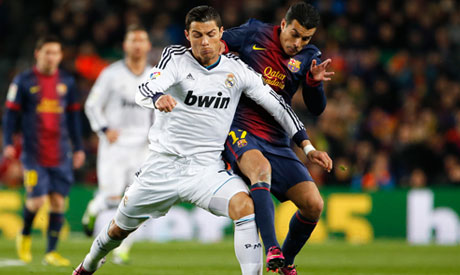
Financially, Real Madrid and Barcelona dominate world football - their annual turnovers dwarf that of any other club

The Deloitte 2013 Football Money League analyses the complete income and revenue of the world’s largest clubs, recognising Real Madrid and Barcelona as the top two institutions, who raked in €512.6m and €483m respectively in the 2011/12 campaign alone. In fact, Jose Mourinho’s Blancos became “the first sports club to surpass the €500m revenue threshold in a single year”, according to Deloitte’s report. Both clubs’ budget is reflected in this turnover as Richard Fitzpatrick, author of the outstanding El Clásico, points out: “La Liga is crippled by the Barcelona/Real Madrid duopoly, which stifles other clubs in Spain; for example, Rayo Vallecano’s budget this season was €7m compared to the €500m that both Real Madrid and Barcelona had to spend.”

Richard and Guillem demonstrate a shared astuteness about how exactly they believe the future of La Liga will pan out. “I think La Liga will become a satellite league.” says Fitzpatrick; and it will soon become clear why. According to Guillem, Barcelona and Real Madrid will most likely end up “playing in some multi-billion pound European league funded by the world's super corporations while the rest of the clubs go to the wall”. Sadly, for the well-being of smaller clubs around the world, this does not look promising. Richard develops on this, explaining how he believes there is “an inexorable push towards a Super European League with, say, four Spanish teams qualifying every season”. With other European giants likely to join said 'Super League', set to become the spoilt brat of a love-child of the money-centred farcical organisations which control world football, a devastating period of neglect shall be inflicted upon the clubs left behind.

Now, where does all of this actually leave Spanish football?

Spain's leading football economist and economics professor at the Universidad de Barcelona, Jose Maria Gay de Liebana, predicted last September that Spanish football will “kill itself” in the dauntingly near future. “A year ago, I predicted that La Liga had ten only ten seasons left, now I see that five more would be a lot.” Prophetic? Undoubtedly. And hauntingly so.

Ever since Pep Guardiola, the iconic Catalan, introduced his innovative pressing game to Barcelona back in 2008, teamed with the famed tiki-taka style of play, Spanish football has been immensely fashionable. 

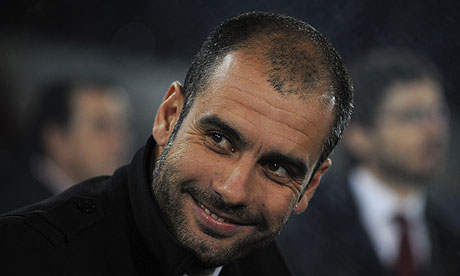
The inspirational and catalytic Pep Guardiola made his Barcelona side play beautiful football; in turn, he also inspired the Spanish national team's success

Guardiola's renovation of Barcelona saw him win an unrivalled sextet of trophies in his first full year in charge; and this alerted a certain Vincente del Bosque to take note, leading to the worldwide fascination in and scrutiny of Spanish football. Del Bosque added to Luis Aragonés’ Euro 2008 victory by claiming the 2010 World Cup in South Africa and then, in defiance of his critics, inspired his squad to a successive European Championship title last year.

The significance of this revolutionary playing style and success of the national team is that, the current crop of outstanding players who are either Spanish and play for the national team, or were players under Guardiola, have all contributed to the monstrous rise to worldwide domination from Spain. Therefore, removing Barcelona and Real Madrid especially will vastly contribute to the proposed death of La Liga and inevitable neglect of the smaller clubs. There is also no guarantee that future generations of Spaniards will be of similar calibre to today’s. The identity of Spanish football may well be on the verge of becoming extinct: in its own country.

In mid January, Bayern Munich made the remarkable announcement that Pep Guardiola is to become the club's head coach come the end of the current season. Bayern is a club run similarly to Barcelona, explaining why Guardiola opted for a move to Germany: both are owned by members who are also fans, own impressive youth academies (something which has been enshrined in law Germany’s top two leagues) and are worldwide brands.

Unlike La Liga, debt is not a noticeable issue in the Bundesliga, as fans are valued - not exploited. Season tickets at Munich can be purchased for as little as €100 and average attendances in the whole of Germany embarrass England, Italy and Spain.

Hans Joachim-Watzke, the CEO of Borussia Dortmund, sees importance in treating the average German supporter correctly 

The Borussia Dortmund CEO, Hans-Joachim Watzke, recently told FourFourTwo that “if you tell a German fan he is just a customer, he is going to kill you”. Christian Seifert, the Bundesliga chief executive, believes that the success of the German top flight is due to the “core value” of the supporter and their importance at every club, hence the affordability of tickets. Team this with the dwarfing average attendances, youth dependency, the ‘50 + 1 rule’ (which consists of members having to own at least 51% of a club so that a single entity cannot take control), clubs paying less than 50% of their revenue on player wages and the sheer attraction of football quality to the fans, and it is clear to see why the Germans can breathe easily, creating a yearly turnover of around €2bn with small annual losses now and again (two since 2003).

In the land where the fan is the king of the castle, Guardiola is about to unleash the Spaniard, the Catalan,inside him; this may be the first of many examples to come, but the Catalan's introduction to German football is where the external redemption of Spain will begin.

“I think he will bring his pressing game to Bayern Munich,” says Richard Fitzpatrick. “But not so much of the tiki-taka unless he buys Pique to bring it out from the back, Sergio [Busquets] and Iniesta.” It is,however, rather unlikely the trio will be moving to accompany Guardiola. He shall have to adapt to Germany's differences, as well as keeping his core, Spanish orientated beliefs, potentially becoming a pioneer as the first landmark prophet of Spanish football.


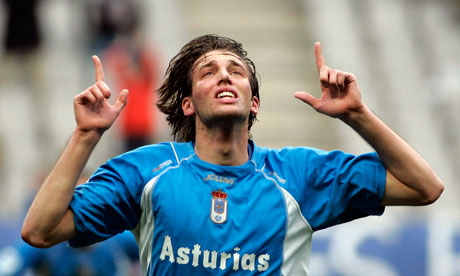
The financial resurrection of Real Oviedo was aided by former players, like Swansea City's Miguel Michu (above), who gifted a portion of their own money to help rescue the club from liquidation

Of course, while Guardiola ventures to other lands for his own expedition, Spain is still left to stagnate; and this is where remarkable tales, such as that of Real Oviedo, need to become more frequent. The experience of the Oviedistas came to light in November of last year, when the club’s president began enquiring about the details of liquidation. The club may presently find itself in the third tier of Spanish football, however they are looking ambitious and resurrected: thanks to a cluster of English Premier League players, the richest man in the world and, of course, their fans.

Since relegation from La Liga in 2001, Real Oviedo have never gone under 10, 000 season ticket holders; something which only two other teams outside of the top flight can boast. Therefore, a respected fan base is more likely to aid clubs in times of desperation. Add this to the fact that Premier League trio Miguel Michu, Juan Mata and Santi Cazorla, who have all played for Oviedo, gave money from their own pockets to help out, and you have a redeeming formula.

It also drastically relieved tensions when the richest man in the world, Mexican Carlos Slim (worth £43bn through his telecommunications company), bought a stake in the club worth under £1.6m, hauling the club from death’s door, feeding it a much needed meal or two, and forcing it through rehabilitation.

Naturally, other factors aided Real Oviedo in their rise from the depths, but their supporters are worthy of , the fans are the “core” of football. The small Spanish club may be eons away from the bright lights of Bayern Munich; however its story is an example to all of Spanish football.

Alter your attitude towards the fans to that of the German culture, and reap the rewards come Judgement Day. Whether or not the Spaniards will take note of what is staring them in the face, however, is another issue.

After all, the potential exists: Spanish football can be rescued from the looming abyss of its widely prophesied fate, avoiding the perils of its own creation. Although, this will only occur should they be acknowledged and amended.

And it is all down to those who are ready and willing.